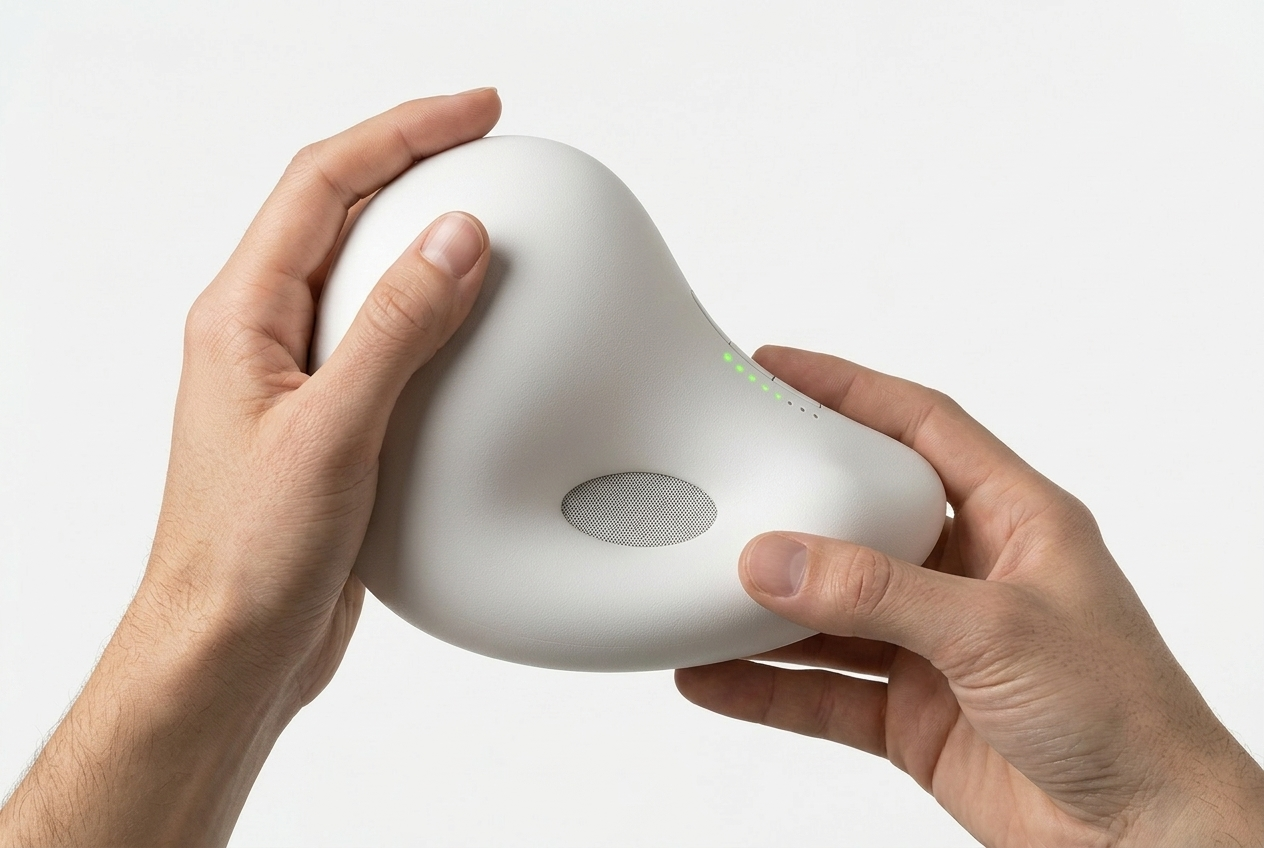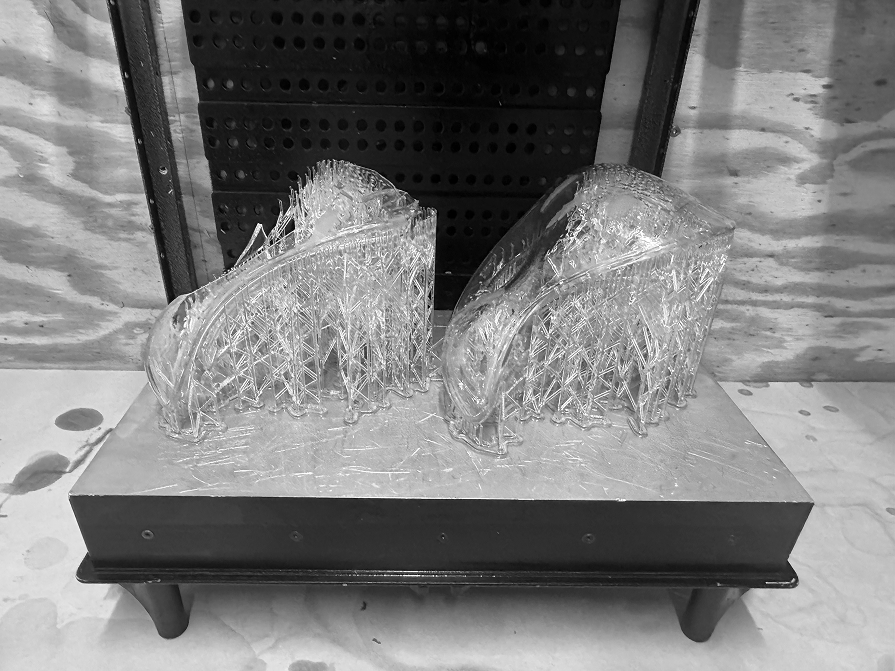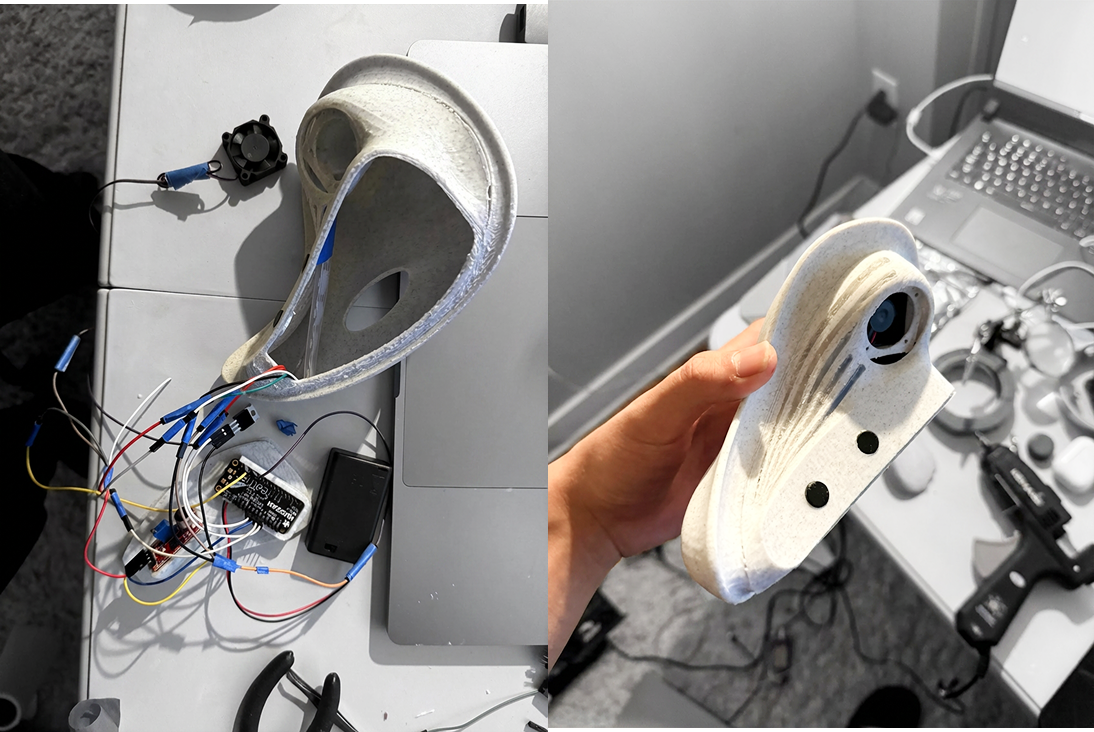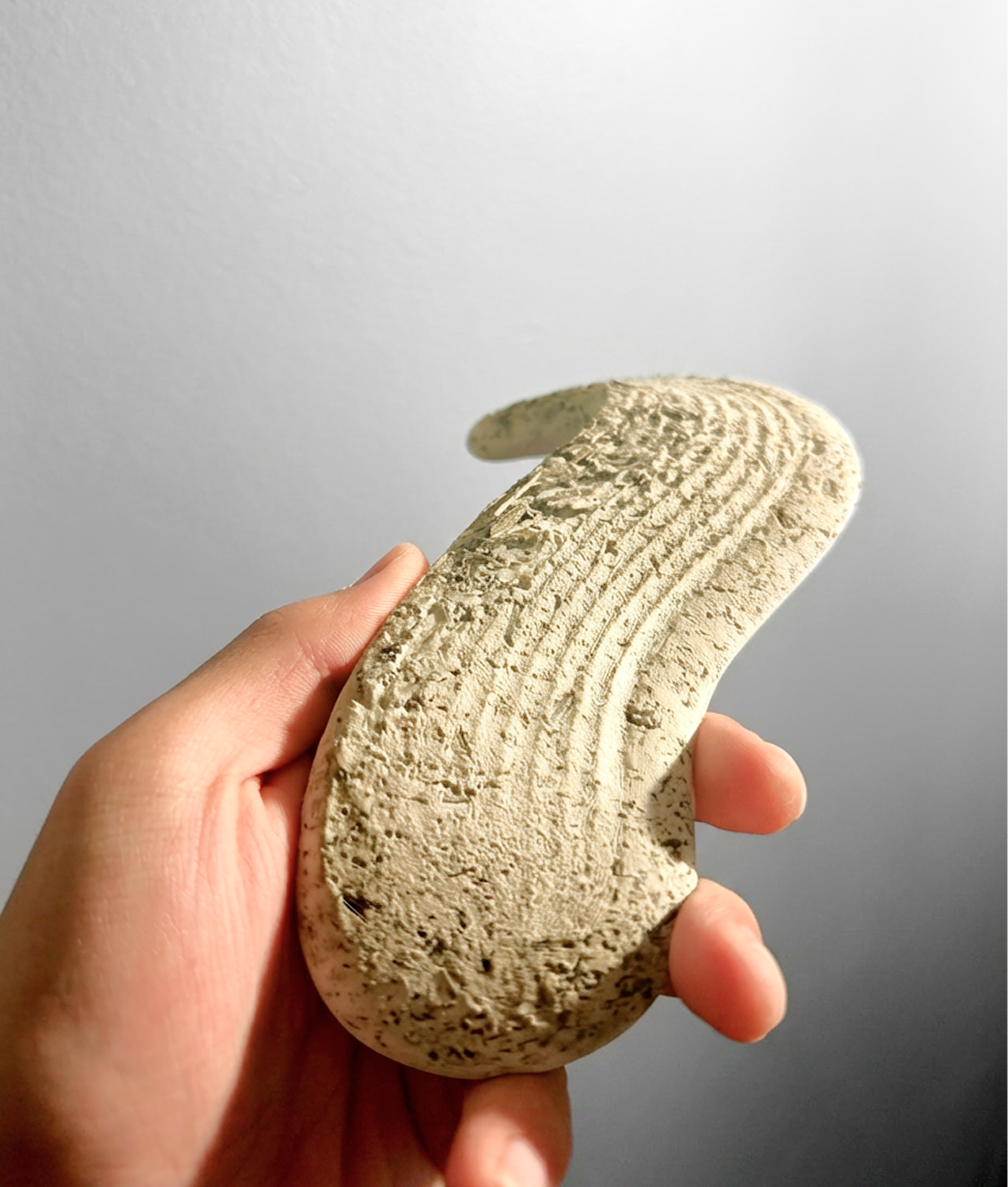
Background
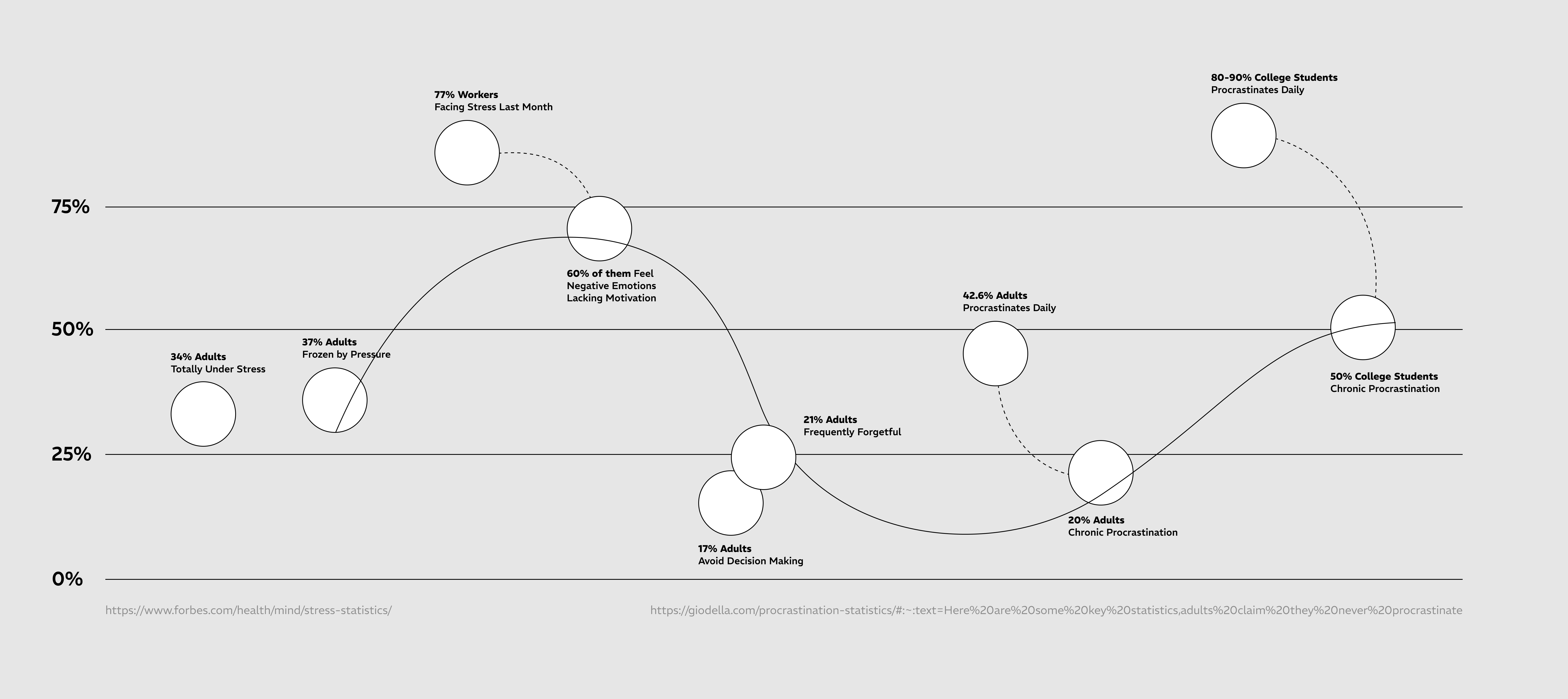
For 20-27-year-old students and professionals, stress and procrastination are deeply connected. With 77% facing stress and up to 90% of students procrastinating daily, this cycle hinders focus and productivity, affecting motivation and well-being.
What is procrastination?
"Procrastination is a way of self-defense, we fear a threat to our sense of worth and independence."
"People often experience significant stress when facing overwhelming or difficult tasks, which can lead to procrastination."
For better understand the procrastination:
Procrastination is an emotional challenge
it's not your fault to procrastinate, similar to the anxiety experienced during public speaking. While it can't be completely eliminated, it can be effectively managed.
How does procrastination work?
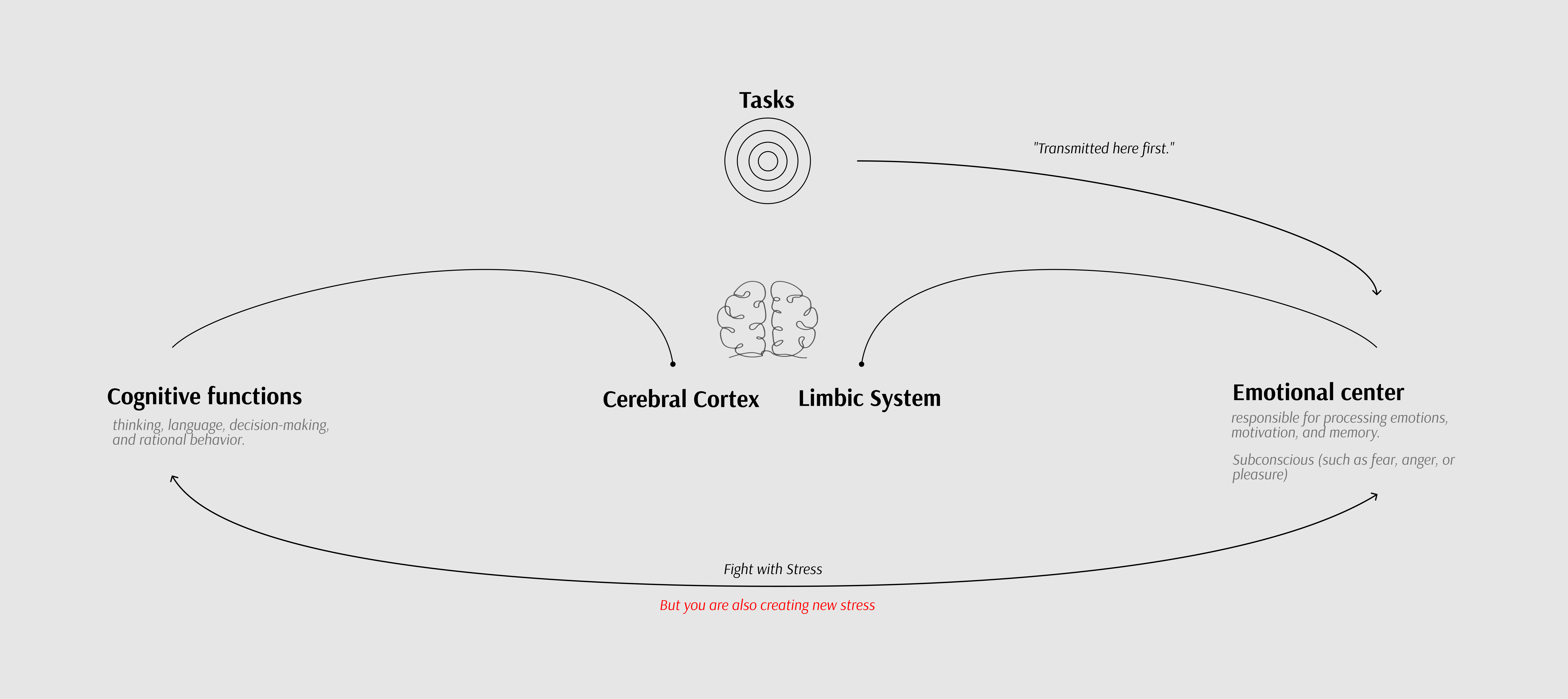
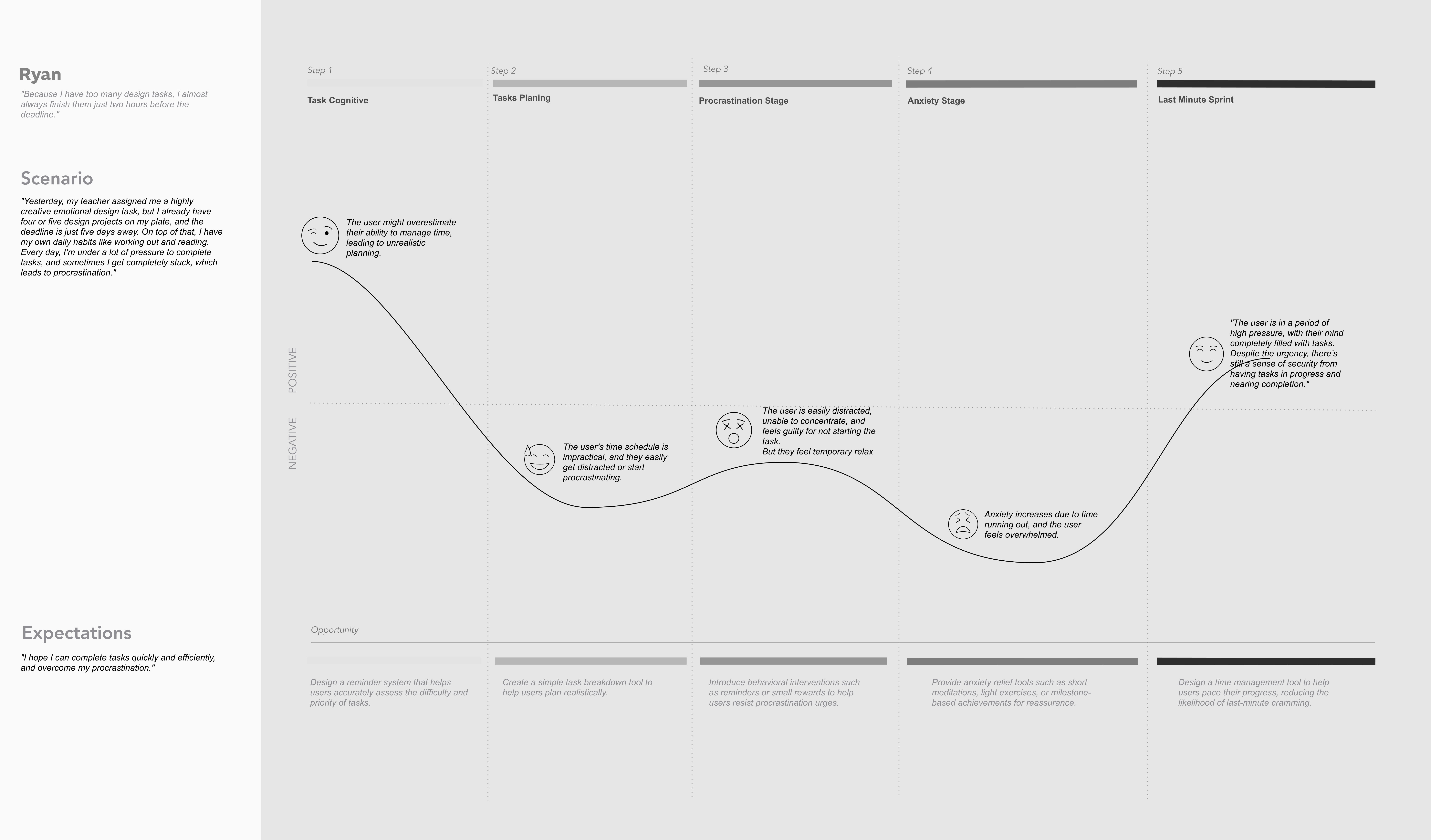
Similar to the infographic: the more you try to overcome procrastination, the more your emotional center conflicts with your cognitive center, increasing stress. This is why people feel like they're resting but still experience growing stress as tasks accumulate.
Understanding:
Task-based
Procrastination cannot be completely solved by any product because its root cause is the desire to avoid the issue itself (Tasks).
Challenging to resolve
Procrastination cannot be completely solved if you struggle with poor time and task management.
The only solution
Focus on starting tasks immediately without overthinking.
User Research
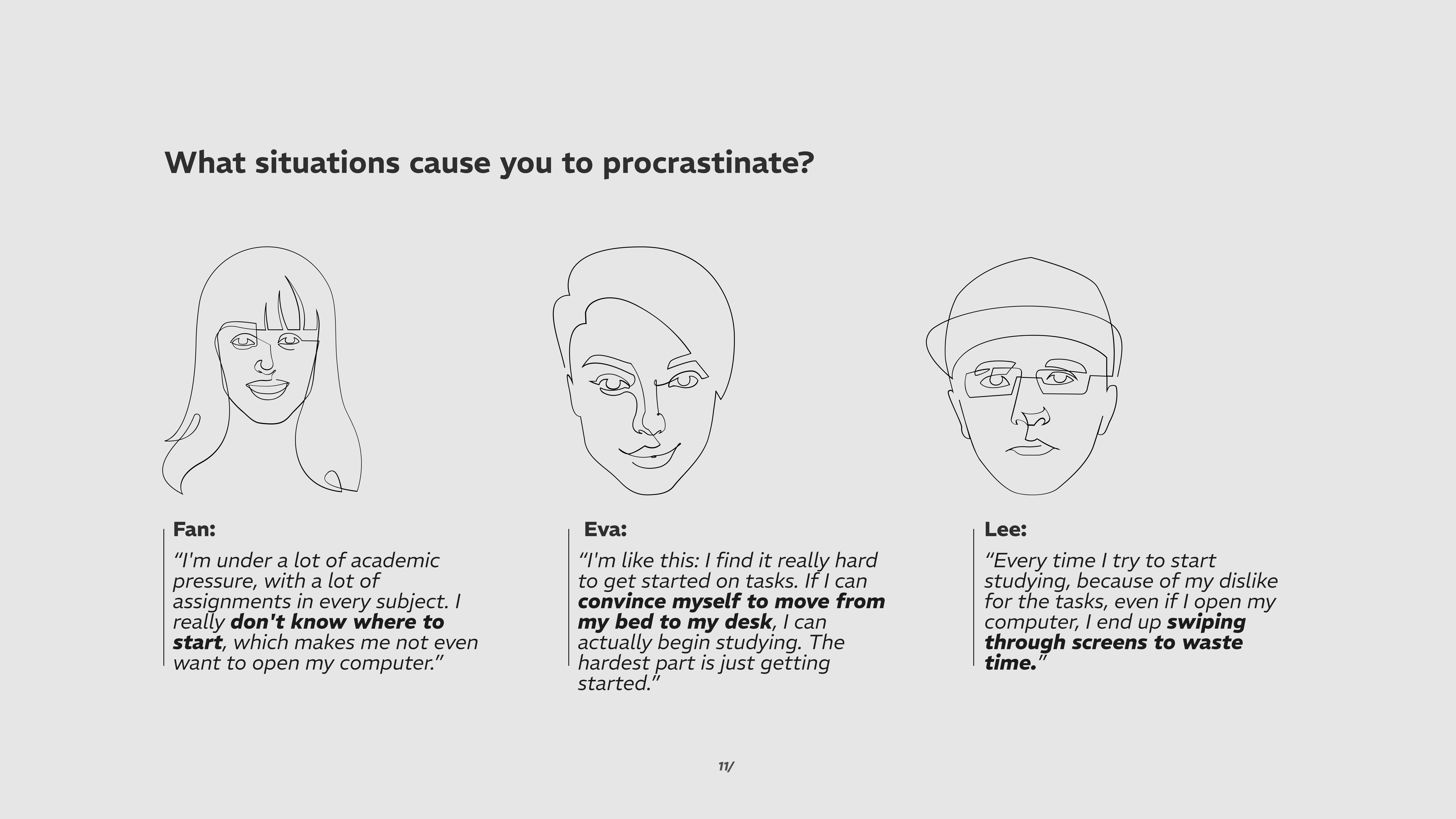
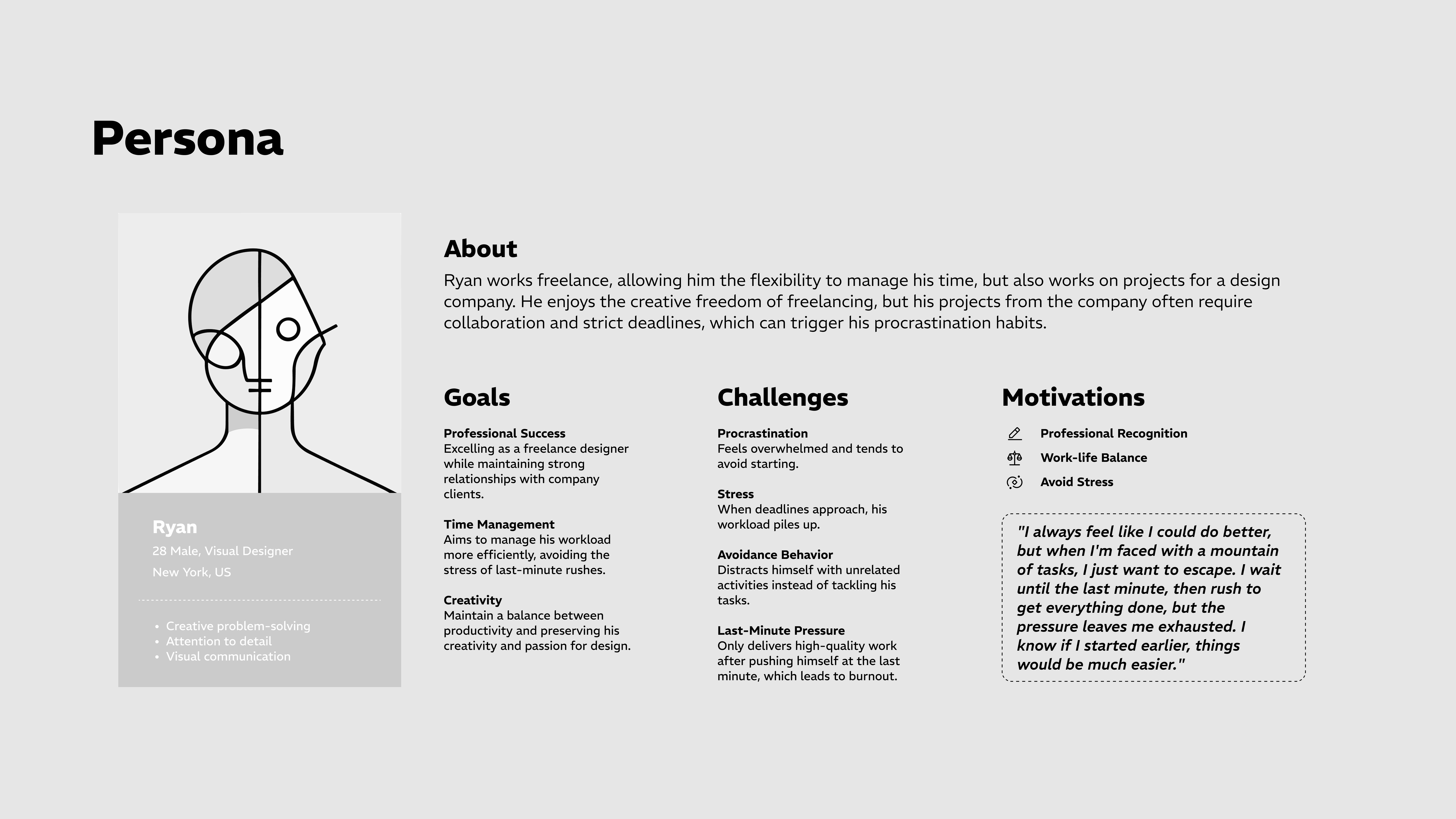
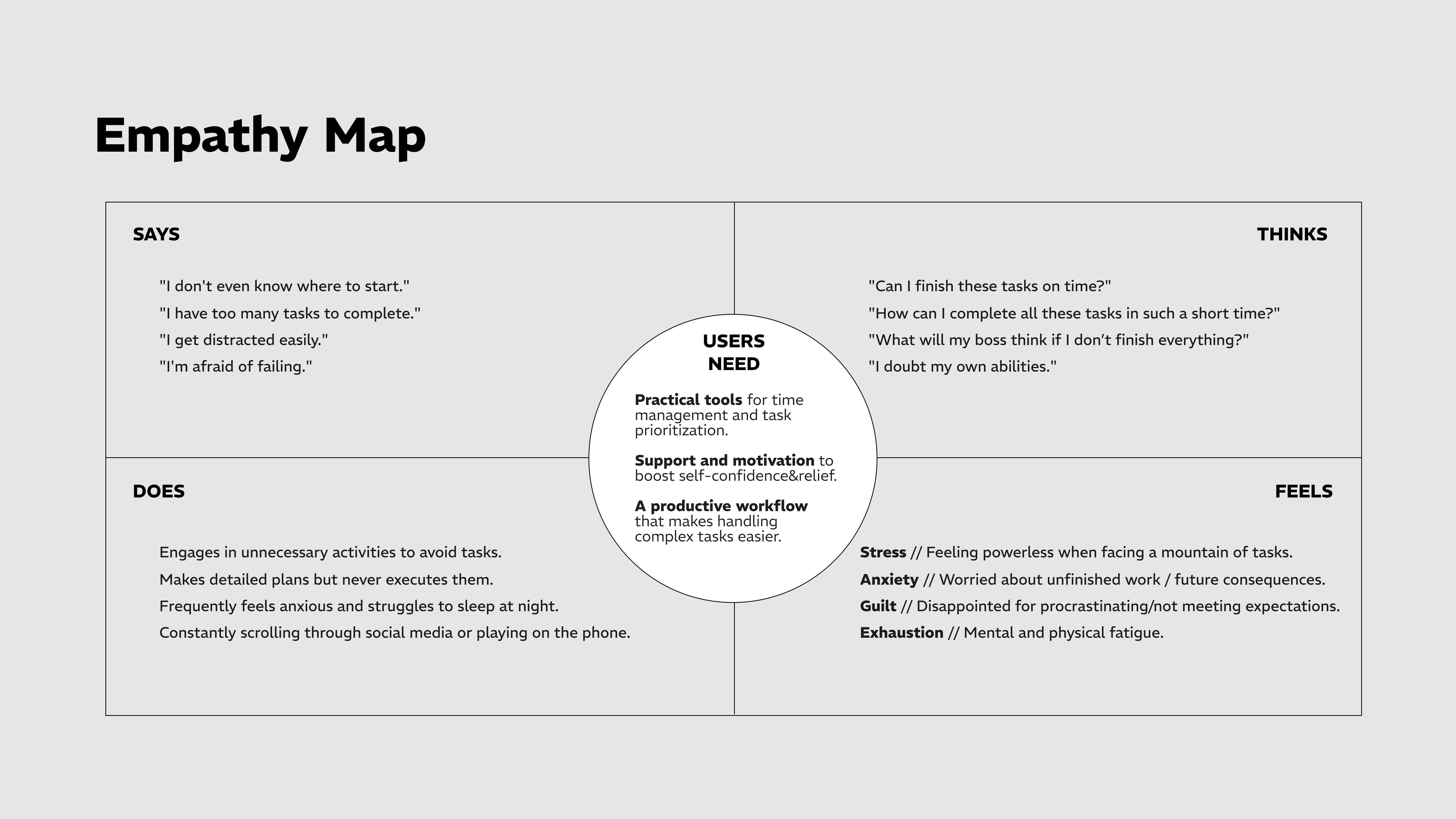
After interviewing several users who identify as chronic procrastinators, we discovered that their procrastination isn't due to laziness. Instead, they are often overwhelmed by tasks such as homework or work assignments. In fact, 70% of them would rather organize their room than begin their work.
70% of people mentioned they need a better environment to create their ritual for starting work.
pain points
Prone to abandonment
People often abandon tasks because they find them too difficult.
Disorganized Environment
A cluttered space can negatively impact mood, making task initiation difficult.
Lack of a clear starting point
Having too many tasks makes it difficult for users to begin their work.
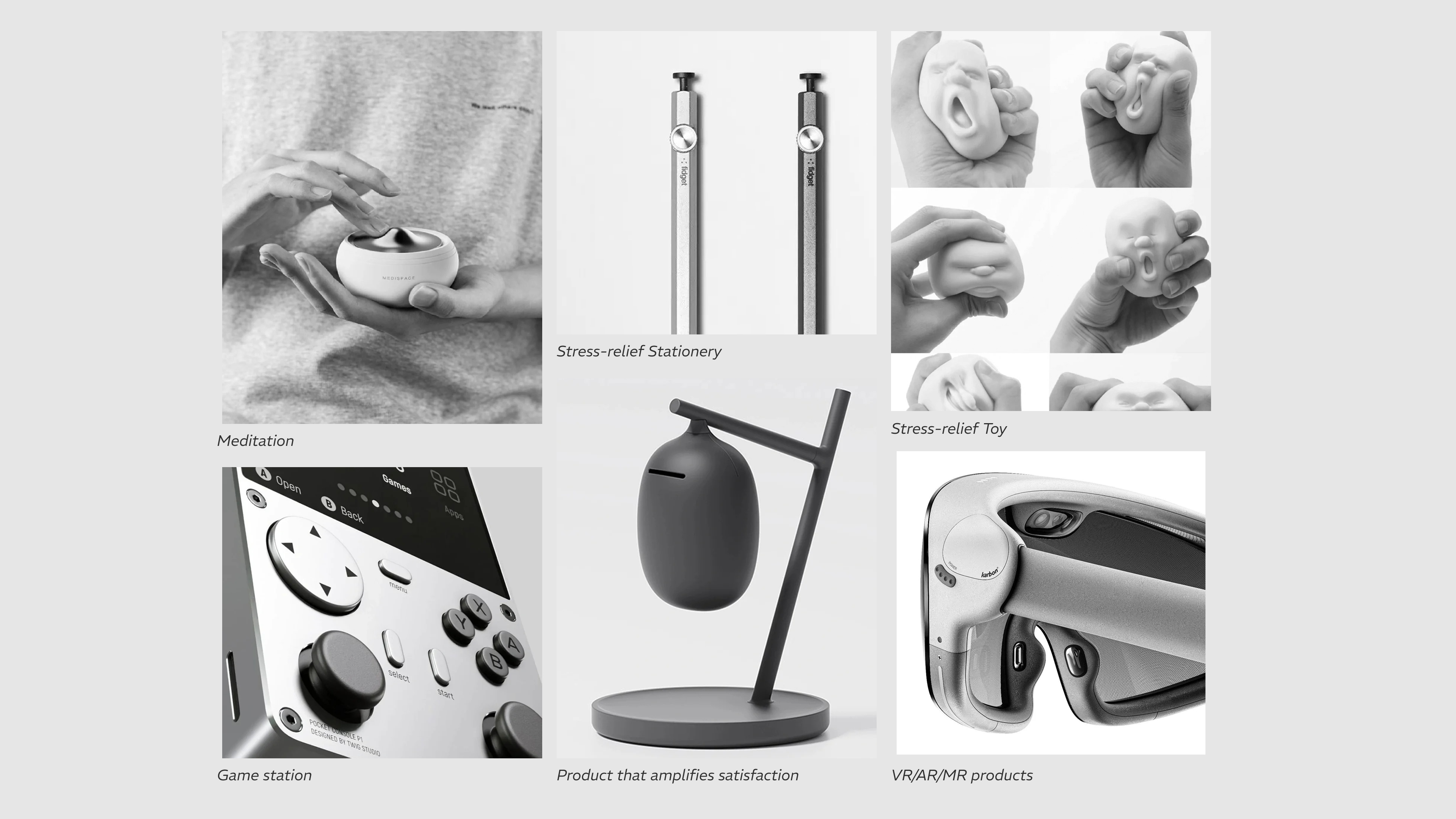
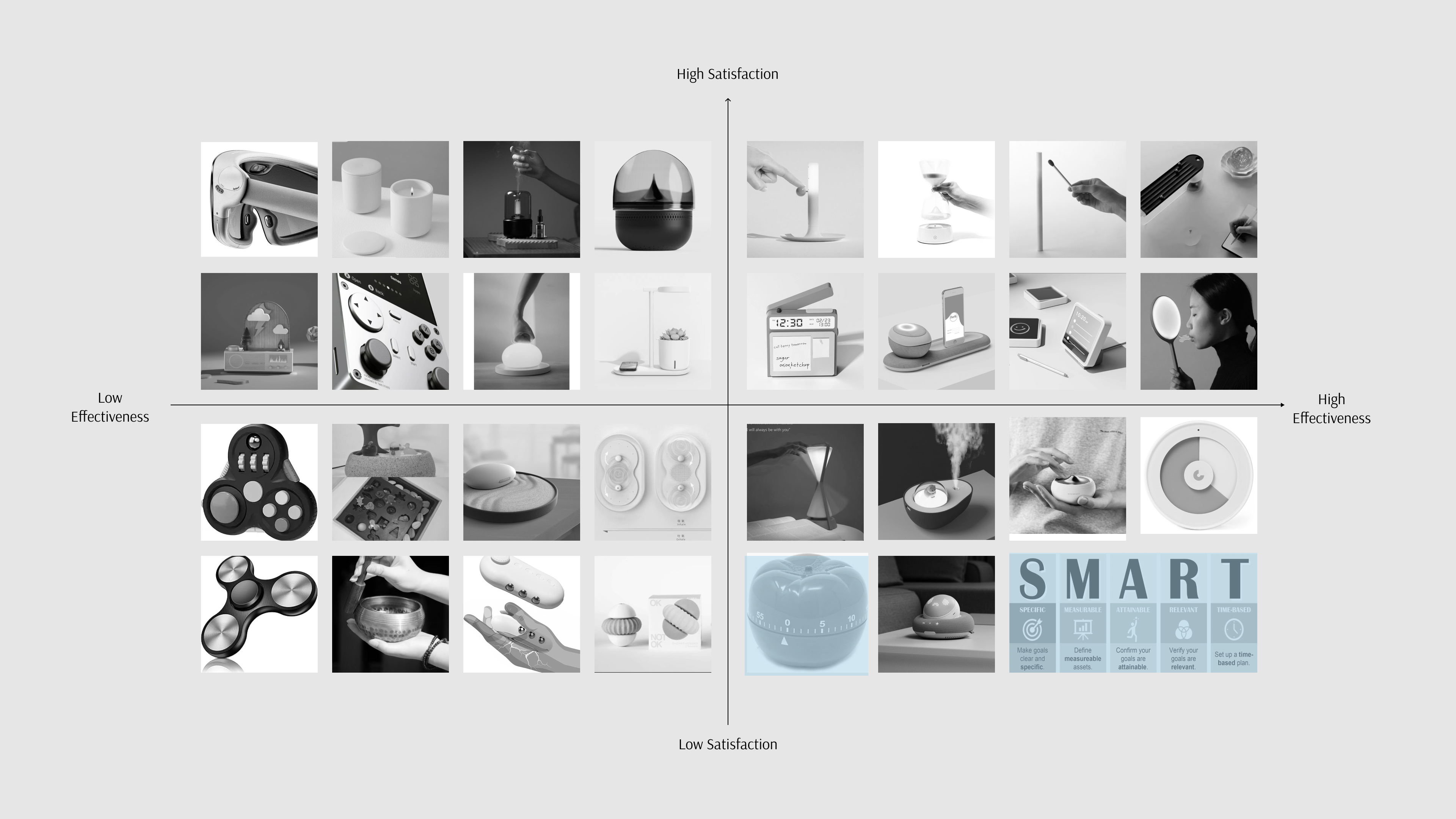
Excisting products
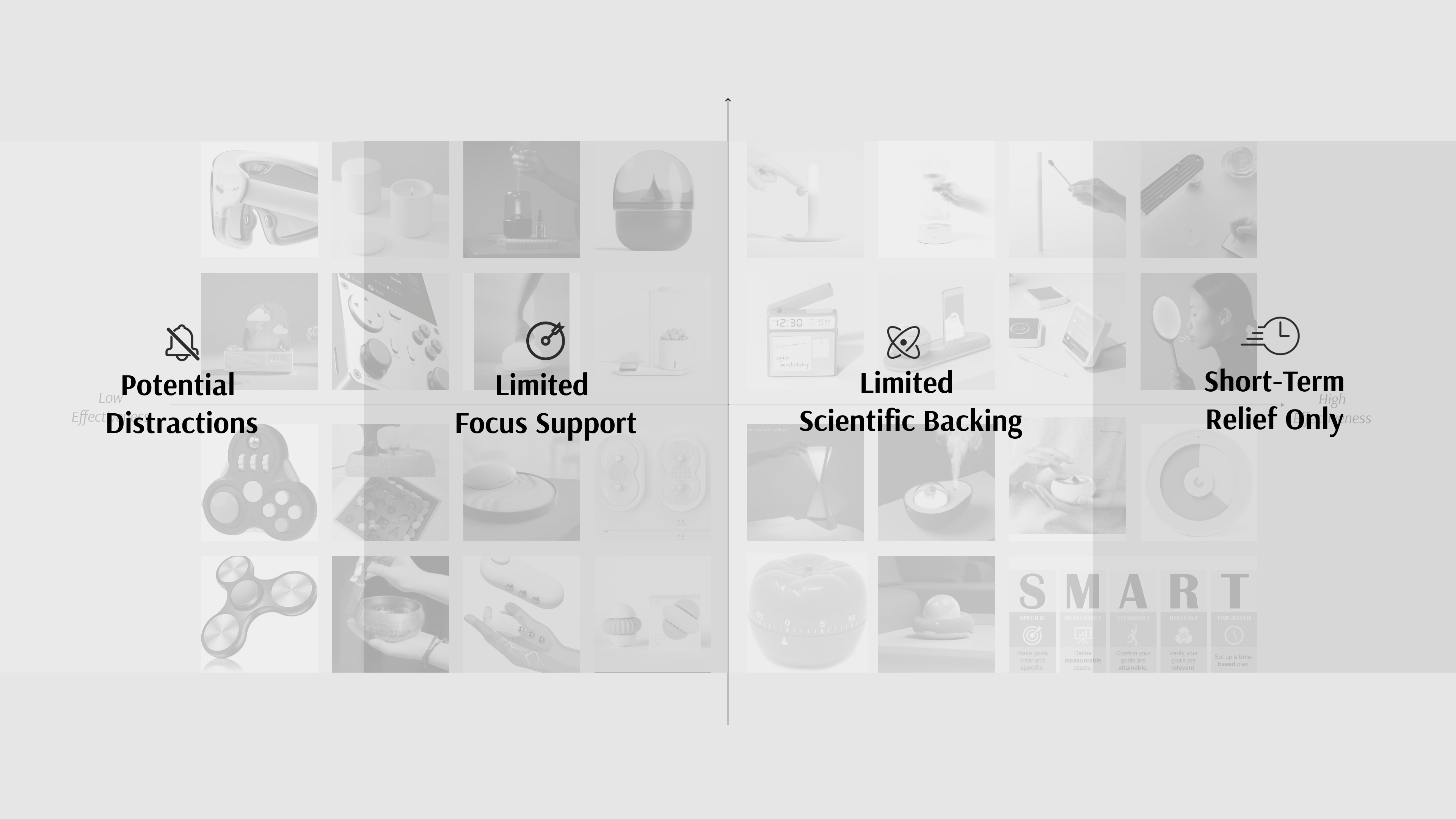
Most effective products help users develop good habits like time and task management but often fail to motivate them to start. Conversely, while they can reduce stress, they lack sufficient functionality to aid in focusing.
For example, the Promoto clock works well for individuals who already have strong habits that help them overcome procrastination, even it helps.it still encourages users to engage their logical brain to counteract emotional impulses. Also, it doesn't work for those who struggle to start tasks.
Does that mean we can't do anything about it?
No! The answer is no, we can't solve procrastination by simply providing time management products or addressing root causes like completing tasks. However, we can help users feel better during the decision-making phase.
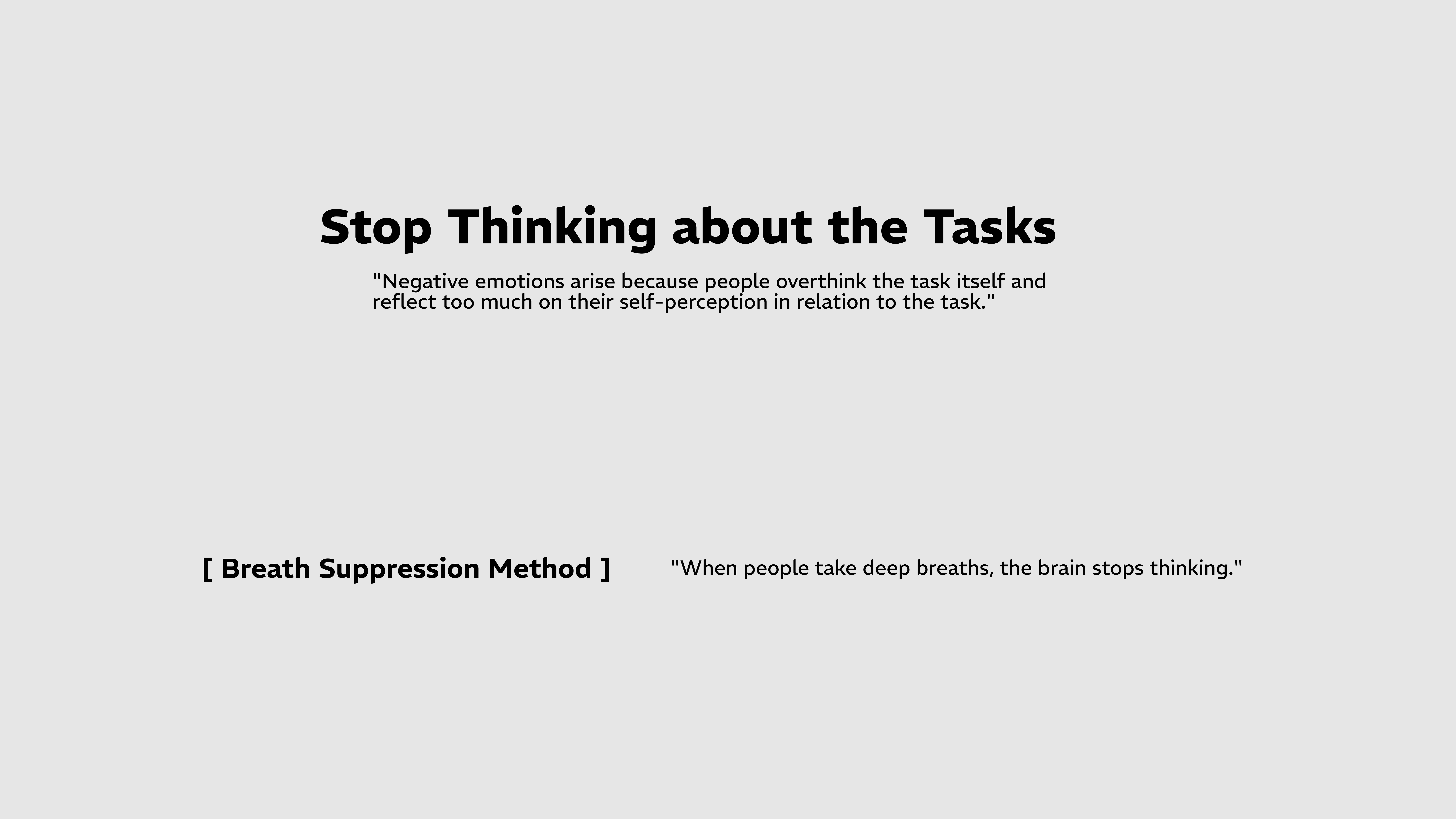
The breath suppression method can achieve this:
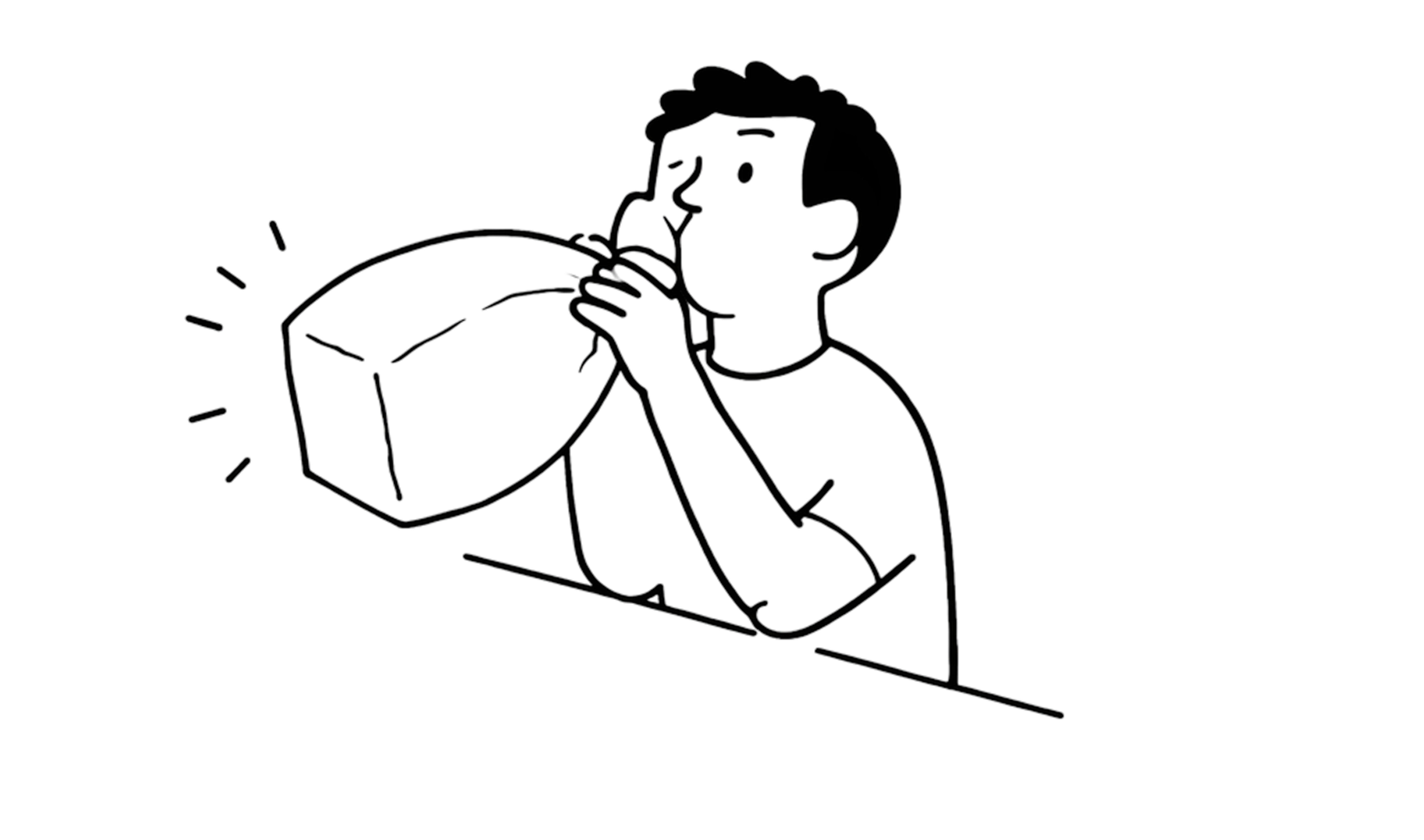
Let's do a quick test. Imagine your last meal, then take a deep breath, a really deep breath. What were you thinking during that deep breath?
The answer is: Nothing! You were thinking nothing. That's why we all take deep breaths when facing heavy tasks. While we can't completely solve procrastination, we can help alleviate stress by using deep breathing techniques. This approach can help suppress negative feelings and potentially lead to a state of flow.